Electoral upheavalin the United States


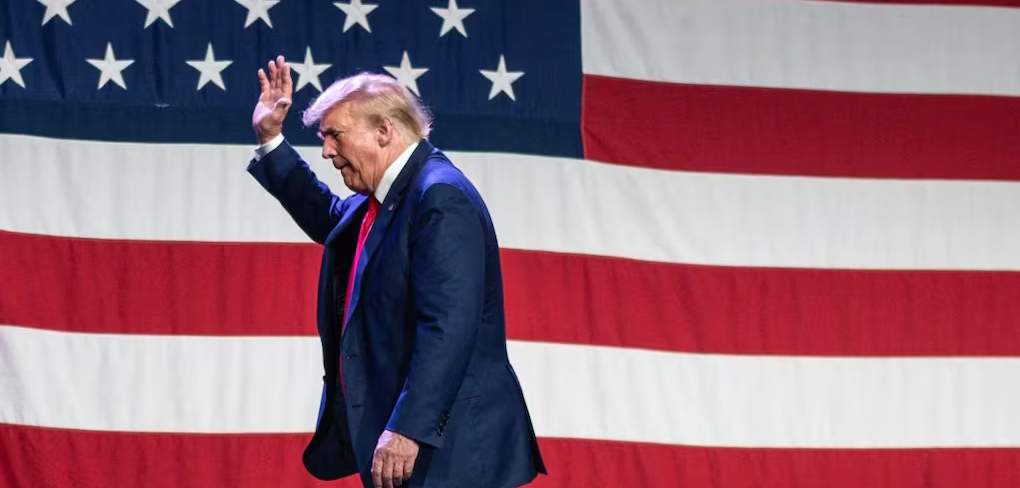
Trump loses Congress. The Democrats take both houses and five Republican governorships. The defeat triggers a crisis in the White House and deals a blow to his allies, including Milei.
The ruling party lost both chambers and saw its share of the vote decline in almost all of the approximately 1,700 counties where the majority of votes had already been counted, according to a survey by Reuters and USA Today (4 November). It was an electoral earthquake driven by widespread rejection of the government.
VERSIÓN EN ESPAÑOL.
The scale of this debacle is illustrated by the defeat in the government’s own strongholds. In Texas, the Republicans lost a Senate seat and the governorship. The same happened in Ohio and Iowa. Trump had won all three states by more than ten points in 2024.
In the Senate, the ABC News count put the Democrats at 54 seats – including the two independents who align with them – against 43 for the Republicans, with Alaska, Mississippi and Nebraska still too close to call. The Democrats won seven Republican seats in Texas, Kansas, Iowa, Ohio, Maine and the two Carolinas. They also retained Georgia and Michigan. In the House of Representatives, where 218 seats are required for a majority, ABC reported 229 Democrats and 163 Republicans, representing a net Democratic gain of 25 seats. These figures are as of 4 November, with the count finalised at 5.37 am Argentine time, subject to pending recounts.
Of the 36 governorships up for election, five swung from Republican to Democratic in Georgia, Ohio, Iowa, Nevada and Texas. In Florida, the Republicans retained the Senate seat and the governorship, which was won by Byron Donalds by a narrow margin (AP and ABC News, 4 November). The Democratic victories in these states are a sign of Trump’s deep rift with a significant portion of his agricultural and industrial electoral base.
In the early morning Senate recounts, James Talarico was leading Ken Paxton by 55 per cent to 43 per cent in Texas, with 90 per cent of the expected votes counted. Adam Hamilton was leading by 51 per cent to 46 per cent in Kansas, with 96 per cent counted, and Annie Andrews by 51 per cent to 47 per cent in South Carolina, with 96 per cent counted. The lead also widened in several Democratic states compared with the 2020 election for the same seats. In New Jersey, it rose from 16 to around 27 points with 92 per cent of the projected vote counted. In Rhode Island, it rose from 33 to around 38 points with 97 per cent counted. There have been more than 59 million early votes, exceeding the figures for 2022, although the national total is still needed to draw a comparison with previous elections.
The cost-of-living crisis that hit the Democrats hard in 2024 backfired on Trump. The war with Iran drove up fuel prices and undermined the promise to end wars. According to election polls, four in ten voters told that they had wanted to express their opposition to Trump through their vote for Congress, whilst fewer than two in ten wanted to support him. Around three-quarters also disapproved of Congress’s performance. The Republican decline in support among young people and Hispanics compared with 2024 widened the defeat. This shift in the electoral landscape goes hand in hand with a loss of credibility affecting the political system as a whole. The results reflect more a rejection of the Republican tycoon than a confidence in the Democrats.
Amidst the Democratic wave, it was a great night for its ‘Democratic Socialists of America’ (DSA) wing, which has gained at least five new members of the House of Representatives, more than 20 state legislators and the mayoralty of Washington DC, in addition to that of New York and two existing members of the House of Representatives. Overall, the DSA claims victory for the candidates or legislative referendums it has championed in 75 local elections.
Among the winners, there was a notable surge in the election of candidates from historically oppressed and under-represented groups to key government posts – groups that had never before held certain institutional positions. The 2026 election produced several milestones: Keisha Lance Bottoms in Georgia became the first Black governor in the United States; Gina Hinojosa, the first Latina governor of Texas; Deb Haaland, the first Indigenous governor; and David Crowley, the first Black governor of Wisconsin. Amy Acton was also the first woman elected governor of Ohio. In Congress, Abdul El-Sayed will be the first Muslim senator, Peggy Flanagan the first Indigenous senator, Josh Turek the first wheelchair-user senator and Chris Pappas the first openly gay male senator. They are joined by Juliana Stratton, who will bring the number of Black women in the Senate to three, and Adam Hamawy, New Jersey’s first Muslim member of Congress. This represents a significant expansion of institutional representation for historically excluded groups, although these advances in the social composition of elected office do not, in themselves, imply a homogeneous political orientation or a transformation of the structures that produce such exclusion.
The scale of the wave, as measured by the overall vote count, illustrates the size of the anti-Trump majority. In the House of Representatives election, the Democrats secured 55.65 million votes (54.9 per cent) compared with 44.31 million for the Republicans (43.7 per cent), a difference of approximately 11.3 million votes and 11.2 percentage points. In the Senate elections, the Democratic lead stood at 4.6 million votes, with 52.3 per cent compared to 45 per cent for the Republicans, a gap of 7.3 percentage points.
Alongside the political crisis caused by Trump’s Bonapartist methods and his clashes with Congress, we will undoubtedly witness another crisis, as the leadership, profile and programme of the Democratic Party—which has triumphed tonight—are defined. The DSA is on a path of moderation and rapid adaptation, in preparation for the launch of Alexandria Ocasio-Cortez as a presidential candidate. Although the candidacies within the dominant wing of the Democrats remain unclear, a very fierce internal struggle will undoubtedly unfold. Sectors of the masses have placed great expectations on candidates who have presented themselves as part of the electoral machinery of the imperialist state. There have even been student demonstrations on election day, highlighting the link, for a section of the masses, between Trump’s electoral defeat and his previous mobilisation efforts. The tensions and contradictions that will unfold are set to be very intense and on a mass scale.
Government by veto and decree
Trump congratulated the Democrats and admitted that he might negotiate with them, even on immigration. He had attributed his defeat to his absence from the ballot paper. Right up until the end, his national response focused on his ability to continue effectively exercising the presidency through the use of the veto, without making a general allegation of fraud. The scale of the defeat limits the scope of any challenges. Changing the majority would require overturning results in several states. Local manoeuvres remain possible. Before the election, a federal judge had already rejected a lawsuit by the Department of Justice seeking to prevent the certification of a potential Democratic victory in Alaska (Reuters and AP, 4 November).
From January, the new majorities will be able to set the legislative agenda, launch investigations, summon officials and contest budget allocations. The Senate will be able to block judicial and executive appointments. The House can pass articles of impeachment, but removal from office requires a two-thirds majority of senators present. With all 100 senators present, 67 votes would be needed. A majority of 54 leaves this outcome contingent on a Republican split of a different magnitude.
Trump has brought forward his ‘Plan B’ of vetoes and ad hoc agreements when a deadlock proves costly. It is likely that he will also seek to expand the use of his executive powers. To override a veto, a two-thirds majority is required in each chamber. Through executive orders, the White House can issue guidance to agencies, tighten the enforcement of immigration policy and invoke delegated or emergency powers in trade matters. Their scope depends on existing legislation and is open to legal challenges. Without an agreement to fund the government, there could be a partial government shutdown that would affect federal workers and users of public services.
That is where the explosive potential of the next two years lies. A president defeated at the polls – compounded by the fact that, constitutionally, he cannot stand for re-election – may step up the persecution of migrants, the crackdown on protests and unilateral measures to keep his support base united. At the same time, the battle for the 2028 succession will encourage Republican lawmakers to distance themselves from the White House when their own survival is at stake. Clashes between the branches of government may result in budgetary agreements or a major crisis if the government attempts to forcibly impose measures that are met with resistance on the streets.
Trump’s allies are reeling from the blow
The defeat weakens Trump’s ability to commit resources and make guarantees to his allies. An opposition-controlled Congress may challenge military spending, review the legal basis for tariffs and investigate the conduct of the war with Iran. Trump retains military command and the diplomatic initiative. But we must not lose sight of the fact that, in the disputes with China and in the Middle East, his parliamentary opponents are defending the interests of imperialism itself, even whilst questioning the White House’s methods. Opposition to the war at the ballot box opens up scope to demand an end to military intervention in Iran and to arms supplies to Israel, challenging Trump and Democratic complicity.
This setback comes on the heels of two other reversals. In Brazil, Flávio Bolsonaro lost. The mobilisation of students and workers against Bolsonarism altered the picture that had emerged from the first round. The result thwarted Trump and Milei’s bid to bring Brazil into their continental alignment. In Israel, Netanyahu lost his parliamentary majority in the 27 October elections, and there is now a crisis over forming a government in a scenario where the electoral rise of the Arab parties has become a significant factor.
For Milei, the blow is both political and financial. He presented his alignment with Trump as a guarantee of access to dollars and as the cornerstone of a regional right-wing offensive. Washington’s backing with the IMF and the swap line of up to 20,000 million dollars from the US Treasury were key elements of that policy. Argentina repaid the tranche it had drawn down in January. The facility remains in place. The change in the parliamentary majority means that future assistance will be subject to greater scrutiny and undermines the promise of a bailout at Trump’s discretion, with significant Argentine debt maturities looming.
A workers’ solution
Hakeem Jeffries announced that the Democrats will seek to restore health insurance subsidies, reverse cuts to Medicaid, vote against war with Iran and review Trump’s tariffs (AP, 14 October). Restoring healthcare cover would be a concrete victory. The agenda of their leadership leaves the insurance industry, the immigration enforcement apparatus and US imperialism’s military commitments intact. Their parliamentary leaders will seek to manage the clash with Trump through investigations, votes and negotiations, subordinating the people’s demands to the bid to regain the presidency in 2028. Trump’s willingness to negotiate on immigration shows where both parties might find common ground.
The ‘No Kings’ demonstrations on 17 October, ahead of the elections – and preceded by earlier mass demonstrations that brought several million people onto the streets – have demonstrated a strength that goes beyond the Democratic Party apparatus, even though their organisers channelled it towards the ballot box. Turning the legislative victory into a call to wait another two years would leave the trade unions, the anti-war movement and migrant ‘ ’ organisations at the mercy of the electoral calendar and would, moreover, mean that the other political force—which has historically been a pillar of imperialism—would take over government from the Republicans. The parliamentary victory offers trade union leaderships and the left integrated into the Democratic Party a new excuse to postpone a break with the party. They will reinforce electoral careerism.
Action and coordination amongst workers, both documented and undocumented, can organise the defence against anti-immigrant attacks, demand wage increases in the face of rising living costs, confront redundancies and link these struggles with the mobilisation against the war. Within this framework, we propose taking the initiative on industrial action, calling for new mobilisations and preparing for national action, up to and including a general strike. The challenge is to draw up and promote an agenda and programme of action that offer an alternative to those proposed by the Democratic leadership, which intends to keep them in reserve until 2028. From this struggle, an independent working-class political force must emerge, capable of confronting the Trump administration, Democratic complicity and the employers’ organisations that finance both parties.


Más para leer
Espionaje, chisme y derrumbe bursátil de Nvidia: otro capítulo de la guerra fría por los microchips y la IA
10/11/2026
Significado y alcance de la derrota de Trump en la influencia del lobby sionista
10/11/2026
Ueno Bank: el patrocinador de Cerimedo, Milei, los Bolsonaro y el trumpismo
6/11/2026
La asesina y repudiada ICE de Trump va a entrenar a la policía argentina
5/11/2026

Sumate a la comunidad
Hacemos periodismo de otra clase
Necesitamos ser independientes: nos autofinanciamos en un esfuerzo colectivo de quienes estamos de este lado de la lucha. Con tu aporte mensual podemos seguir creciendo en esta tarea militante, haciendo oír la voz obrera y la perspectiva socialista para que gobiernen lxs trabajadores